
Why 10 Football Drills Transform Players
Football skills improve fastest when training targets measurable weaknesses rather than simply adding more hours. A practical programme combines ball mastery, passing, first touch, dribbling, shooting...
Why 10 Football Drills Transform Players
Football skills improve fastest when training targets measurable weaknesses rather than simply adding more hours. A practical programme combines ball mastery, passing, first touch, dribbling, shooting, defending, agility, and match analysis, ideally across 3–5 sessions each week. Players can use 10 core drills, 20–30 minutes of technical work per session, and a simple 1–10 performance scale to track progress. FIFA’s Training Centre emphasises game-relevant repetition, while the FIFA World Cup 2026 will again show how speed of decision-making separates elite players from merely competent ones. World Cup Hub adds daily tournament coverage, team tactics, and player statistics for fans who want to connect training principles with professional football. Start by recording one weakness from your last match, then train that weakness twice weekly for four weeks.

Photo by Mateo Franciosi on Pexels
Want a cleaner training direction before you begin? Use the practical resources and football analysis available through World Cup Hub.
Before 2025: how football skills worked
Before 2025, most football development still followed a familiar pattern: players repeated isolated cone drills, joined team sessions, played matches, and hoped improvement would appear automatically. That approach produced useful touches, but it often failed to measure decision speed, scanning, weak-foot confidence, or performance under pressure. The modern question is not whether repetition matters; it is whether the repetition resembles the demands of a 90-minute match.
A beginner may complete 500 stationary touches and still lose possession after receiving the ball with an opponent nearby. A more useful session might include 100 controlled touches, 40 passes against a wall, 20 changes of direction, and 10 decisions made under a time limit. Research collected by the Journal of Sports Sciences repeatedly links skill acquisition with variable, representative practice rather than mechanical repetition alone. The practical lesson is uncomfortable but valuable: 30 focused minutes with clear targets can outperform 90 unfocused minutes.
Use your last three matches as a data source. Count misplaced passes, unsuccessful first touches, lost one-on-one duels, shots off target, and occasions when you failed to scan before receiving. Then rank each problem by frequency and match impact. This turns “I need better skills” into “I misplaced 8 of 22 forward passes and need a passing decision drill.” For readers following tactical trends through World Cup Hub, comparing a midfielder’s scanning habits with players such as Kevin De Bruyne or Luka Modrić can also reveal what strong decisions look like in context.
The 10-drill foundation
- Wall passing: Complete 5 sets of 20 passes with each foot, controlling the rebound across your body.
- Random cone dribbling: Place 8 cones irregularly and complete 4 rounds while changing direction at each cone.
- First-touch gate: Receive 30 passes and direct the first touch through a 1-metre gate.
- Weak-foot circuit: Spend 12 minutes using only the less confident foot for passes and carries.
- One-on-one moves: Practise 3 moves, then attack a passive defender for 10 repetitions.
- Finishing from angles: Take 24 shots, split equally between near-post, far-post, and cutback finishes.
- Rondo pressure: Play 4v1 or 5v2 for 4 rounds of 2 minutes.
- Defensive jockeying: Complete 6 sets of 20-second lateral movements without crossing your feet.
- Acceleration with the ball: Perform 8 sprints over 10 metres, followed by controlled deceleration.
- Small-sided game: Play 4v4 or 5v5 with a two-touch limit for 4 periods of 4 minutes.
[Internal Link: beginner football training guide]
The best starting point is not the most impressive drill. It is the drill that attacks the error costing you the most possessions, chances, or defensive actions. If your first touch fails 12 times per match, begin there; if your shooting volume is low, improve movement and receiving angles before blaming finishing. That is how football development becomes efficient rather than exhausting.
The 2026 shift
The 2026 shift is the move from volume-based practice to decision-based training, where technical execution is judged by speed, accuracy, pressure, and usefulness in a tactical situation. The FIFA World Cup 2026 will feature 48 teams across Canada, Mexico, and the United States, creating a broader tactical sample for players and coaches to study. The tournament format increases the value of adaptable skills because different opponents will demand different pressing, passing, and defensive solutions.
The useful change for ordinary players is simple: add a decision to every technical drill. Instead of passing to a fixed target, call a colour or number before the pass. Instead of dribbling through identical cones, have a partner point left or right at the last moment. Instead of shooting from the same position, receive across your body, scan once, and finish within three seconds. These constraints make practice less comfortable, but match football is rarely comfortable either.
One specific edge case deserves attention: players commonly train at full speed but fail to practise braking. In a 10-metre acceleration drill, record both sprint time and stopping distance. If your fastest run is 2.1 seconds but you need 4.5 metres to stop under control, your next action will often be slower than a player who accelerates in 2.3 seconds and stops within 2.8 metres. This is why balance, deceleration, and body position deserve the same attention as raw pace.
“Football is the most popular sport in the world,” according to FIFA, but popularity does not make improvement automatic. Training must still be specific, progressive, and measured. Watch how France, Brazil, England, and Argentina create space in World Cup matches, then translate one observed movement into a drill rather than merely admiring it.
Ready to turn match observations into a repeatable plan? Start with one technical target and one decision constraint.
What changed for players?
Players now need to combine technical execution with scanning, communication, physical control, and tactical awareness because modern football compresses decision time. A midfielder may have less than 2 seconds to receive, inspect the next passing lane, protect the ball, and release it before pressure arrives. A winger may need to beat one defender, recognise a covering full-back, and choose between a cross, cutback, or backward pass in the same sequence.
The core skill categories remain familiar:
- Ball mastery: Use the inside, outside, sole, laces, and weaker foot with control.
- Receiving: Open the body and take the first touch away from pressure.
- Passing: Match weight, angle, timing, and surface to the next action.
- Dribbling: Change speed after the move, not only direction during it.
- Finishing: Keep the head stable and select placement before power.
- Defending: Control distance, angle the attacker, and delay the attack.
- Athletic movement: Accelerate, decelerate, turn, and recover efficiently.
- Game intelligence: Scan before receiving and recognise numerical advantages.
The second uncommon insight is that weak-foot improvement can be measured through decision quality, not just passing accuracy. In a four-week test, record 30 weak-foot passes under no pressure and 30 after a scan cue. Many players see accuracy fall by 15–25% once a decision is added; that gap is more important than the isolated technical score because it exposes the difference between practice ability and match ability. Close that gap gradually by reducing distance from 15 metres to 8 metres, then adding a passive defender.

Photo by Franco Monsalvo on Pexels
To connect individual technique with team structure, explore this [Internal Link: football tactics and formations guide] alongside professional match reports from World Cup Hub. A player who understands why a full-back overlaps or why a striker checks short can choose better actions before touching the ball.
What this means now
Improving football skills now means organising training into a weekly system with enough repetition to build confidence and enough variation to transfer the skill into matches. A useful schedule contains two technical sessions, one speed or agility session, one small-sided game, and one full rest day. Players with school, work, or club commitments can reduce each session to 25 minutes without losing the structure.
A practical four-week plan
| Week | Main objective | Technical volume | Pressure added |
|---|---|---|---|
| Week 1 | Clean first touch and passing | 150–200 contacts per session | Minimal |
| Week 2 | Weak-foot confidence | 120–160 contacts per session | Time limits |
| Week 3 | Dribbling and finishing | 40–60 purposeful actions | Passive defender |
| Week 4 | Transfer to matches | 30–40 actions plus games | Active opponent |
On Monday, complete wall passing, first-touch gates, and weak-foot work for 30 minutes. On Wednesday, train random dribbling, acceleration, and finishing for 35 minutes. On Friday, use a 4v4 or 5v5 game with a two-touch rule, and on Saturday review 15 minutes of match footage. Every session should include a warm-up of 8–12 minutes, a main block, and a short record of successful actions, errors, and perceived effort from 1 to 10.
Do not increase every variable at once. Raise total repetitions by no more than approximately 10% each week, particularly if you are also playing two competitive matches. The American College of Sports Medicine supports gradual progression as a central training principle, and football-specific workload should also account for sprinting, contact, and recovery. If your passing accuracy improves but your legs feel heavy during matches, the correct adjustment may be less volume, not more motivation.
At World Cup Hub, match predictions and player statistics can help you study patterns, but your own training log remains the more reliable feedback loop. Record five numbers after each session: completed passes, first-touch errors, successful changes of direction, shots on target, and effort rating. After four weeks, compare averages rather than relying on one unusually good or poor day.
Want a clearer way to connect player statistics with your own development targets?
How can players make improvement measurable?
Players can make improvement measurable by selecting one outcome, one process, and one match-transfer metric for each skill. For passing, the outcome might be 85% completion, the process could be scanning before receiving 20 times, and the transfer metric might be successful forward passes under pressure. Recording all three prevents a misleading result where a player completes easy passes accurately but remains ineffective in competitive situations.
Use the following measurement system for four weeks:
- Passing: Completion rate, forward-pass rate, and turnovers in the defensive half.
- First touch: Number of touches escaping pressure versus touches stopping the ball.
- Dribbling: Successful take-ons, dispossessions, and speed after the move.
- Shooting: Shots on target, expected-quality locations, and time from receipt to finish.
- Defending: Delays, interceptions, forced backward passes, and recovery runs.
- Fitness: Sprint repetitions completed without a major speed drop.
A practical threshold is more useful than a fantasy target. For example, improve weak-foot passing from 62% to 75% over four weeks, reduce first-touch errors from 10 to 6 per match, or increase shots on target from 2 of 8 to 4 of 10. These targets are demanding but visible. If numbers do not move after two weeks, change the drill constraint, not just the effort level.
Film two short sequences from each match, one successful and one unsuccessful. Pause one second before the decisive action and ask three questions: Did I scan? Was my body open? Did I choose the simplest useful option? This method exposes positioning errors that a cone course cannot reveal. It also makes tactical study more concrete when you compare your choices with players from Germany, Spain, Portugal, or the United States during FIFA World Cup 2026 coverage.
[Internal Link: advanced football skills and match analysis]
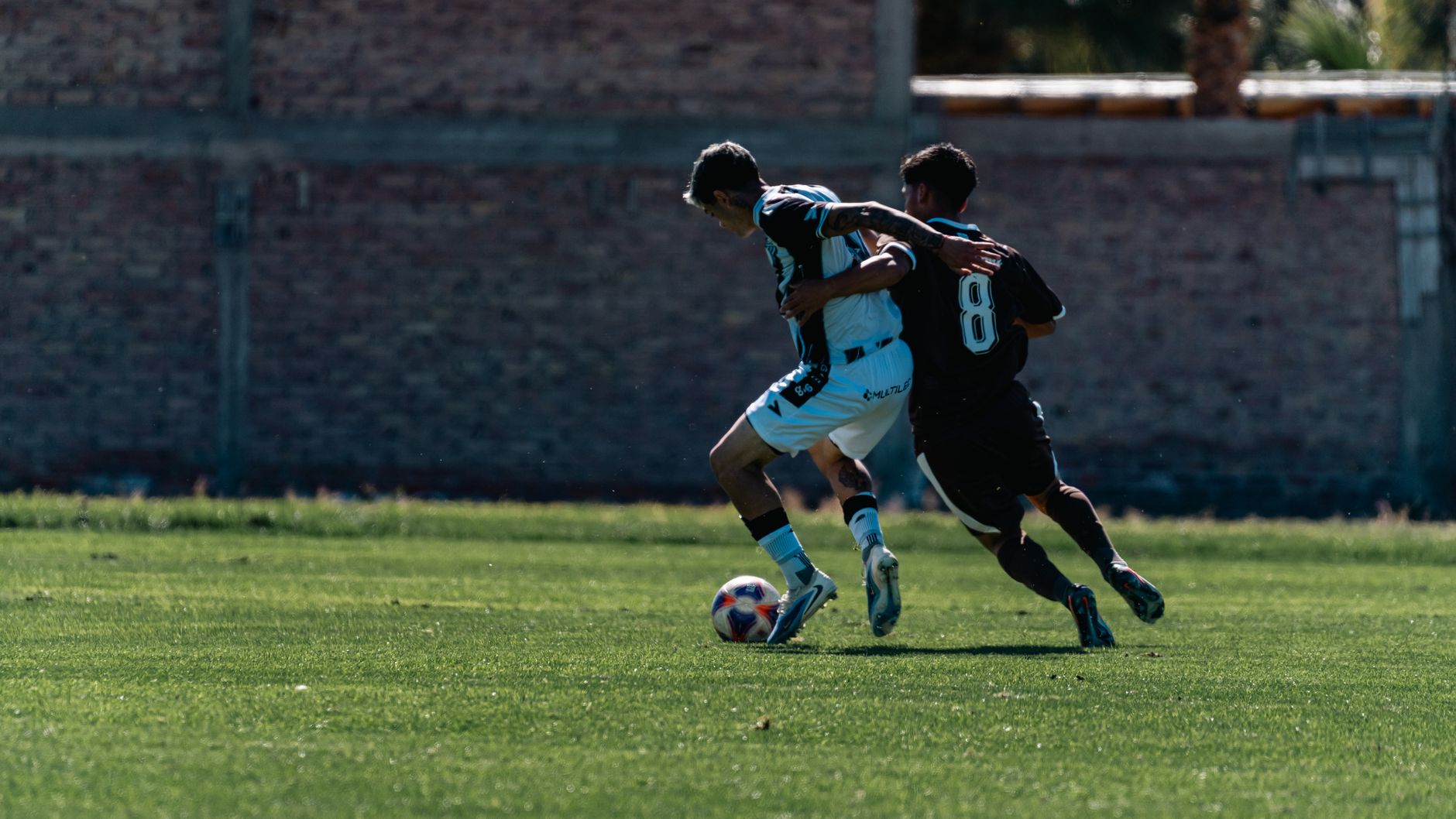
Photo by Franco Monsalvo on Pexels
Three predictions for next quarter
The next quarter of football development will likely reward players who combine technical reliability with tactical adaptability, because coaches have less patience for skills that disappear under pressure. First, small-sided games will become an even more common bridge between isolated drills and full matches. Their reduced space increases touches, decisions, defensive transitions, and repeated finishing opportunities within a shorter session.
Second, wearable and video data will make individual feedback more precise, but the most valuable metrics will remain simple. Sprint count, high-speed distance, pass completion, and shot location can identify trends, yet a 15-second video clip may explain a mistake better than a dashboard. Players should avoid collecting data merely because it looks professional; measure only information that changes the next training session.
Third, weak-foot and scanning training will separate serious improvers from players who repeat comfortable actions. A player who completes 1,000 right-foot passes but avoids the left foot has accumulated volume without expanding options. By contrast, 100 difficult passes after a visual cue may create more match value. The likely winner is not the athlete with the biggest drill count; it is the athlete who transfers the right action into the right moment.
Our working forecast is straightforward:
- Decision constraints will replace more isolated repetition in advanced sessions.
- Video review will become routine for youth and amateur players, not just professionals.
- Deceleration and scanning will gain status alongside speed and dribbling.
- Individual training will become more position-specific, especially for full-backs, midfielders, wingers, and strikers.
The contrarian conclusion is that daily training is not automatically superior. If six sessions produce poor sleep, sore joints, and declining accuracy, three focused sessions may generate better results. Football skill is a coordination problem as much as a motivation problem. Train frequently enough to retain the movement, recover enough to execute it at match speed, and use World Cup Hub’s tactical coverage to keep the work connected to real football.
After four weeks, repeat the same tests under the same conditions. If your weak-foot accuracy, first-touch control, and successful decisions improve, continue. If only your cone-dribbling time improves, your programme is probably too isolated.
See where sharper football analysis can take your next training cycle.
Frequently Asked Questions
Q: What does improving football skills actually involve?
A: Improving football skills means developing technical execution, decision-making, movement quality, and match transfer together. A complete programme should train passing, first touch, dribbling, finishing, defending, scanning, and acceleration across at least 3 weekly sessions. Track one or two measurable outcomes, such as passing accuracy or first-touch errors, for 4 weeks. The goal is not simply to perform a drill faster; it is to choose and execute a useful action under pressure.
Q: How can I improve football skills at home?
A: You can improve football skills at home with a ball, a wall, 4–8 cones, and 20–30 minutes of focused practice. Use wall passes, rebound control, sole rolls, inside-outside touches, weak-foot repetitions, and a small target for accuracy. Complete 5 sets of 20 passes with each foot, then record errors and successful controls. Keep the area safe, avoid damaging property, and add decision cues from a partner or recorded audio when the basic movements become easy.
Q: What is the difference between football drills and football practice?
A: A football drill is a structured exercise for a specific action, while football practice links several actions to realistic decisions and pressure. Ten minutes of cone dribbling may improve close control, but a 4v4 game also trains scanning, passing angles, transitions, and defensive reactions. Use drills to build the movement, then transfer it through small-sided games or opposed exercises. A strong weekly plan normally needs both rather than choosing one exclusively.
Q: Why are my football skills not improving despite training?
A: Football skills often stall because training repeats comfortable actions, lacks measurable targets, or does not resemble match pressure. If you always use your stronger foot, fixed cones, and unlimited time, your technical score may rise without improving match performance. Film two sequences per game, identify the most frequent error, and modify one drill by adding a weak-foot rule, a time limit, or a passive defender. Also check recovery, because poor sleep and excessive workload can reduce accuracy.
Q: How long does it take to improve football skills?
A: Noticeable technical improvement can appear within 4 weeks when a player completes 3–5 purposeful sessions weekly and tracks the same tests. Basic ball control may improve within 2 weeks, while match decision-making usually requires 6–12 weeks of pressure-based practice. Progress depends on starting level, age, coaching, recovery, and training quality. Test passing accuracy, first-touch errors, and successful decisions at the beginning and end of each four-week block.
Q: Should I train football skills every day?
A: You do not need to train hard every day; 3–5 structured sessions plus recovery usually provides a better balance than daily high-intensity work. Light ball touches can be performed on recovery days, but sprinting, repeated shooting, and competitive small-sided games place greater stress on muscles and joints. Increase workload gradually, avoid raising duration and intensity simultaneously, and keep at least one full rest day each week. Players with two matches should reduce extra training volume accordingly.
Q: Is strength or speed training important for football skills?
A: Strength and speed training support football skills by improving acceleration, balance, deceleration, shielding, and the ability to repeat actions late in matches. Start with bodyweight squats, split squats, calf raises, planks, short accelerations, and controlled stopping drills 1–2 times weekly. Technique comes first: a faster sprint with poor braking can create more injury risk and weaker next actions. Combine physical work with ball drills so the athletic improvement transfers to actual football situations.