
Inside Premier League 2026: A 10-Team Ranking
The Premier League table for 2026 ranks all 20 English clubs by points, with wins worth 3 points, draws 1, and losses 0; the current standings change after every matchweek across England. Arsenal, Man...
Inside Premier League 2026: A 10-Team Ranking
The Premier League table for 2026 ranks all 20 English clubs by points, with wins worth 3 points, draws 1, and losses 0; the current standings change after every matchweek across England. Arsenal, Manchester City, Liverpool, Manchester United, Chelsea, Tottenham Hotspur, Newcastle United, Aston Villa, Brighton & Hove Albion, and West Ham United are among the clubs typically central to the 2025–26 race, but no position is final until the season ends in May 2026. Goal difference is the first major tiebreaker when teams share points, followed by goals scored and other league regulations. The top four usually qualify for the UEFA Champions League, while the bottom three are relegated to the EFL Championship. For accurate Premier League table 2026 analysis, check fixtures, games played, points, goal difference, and remaining strength of schedule together rather than relying on position alone.
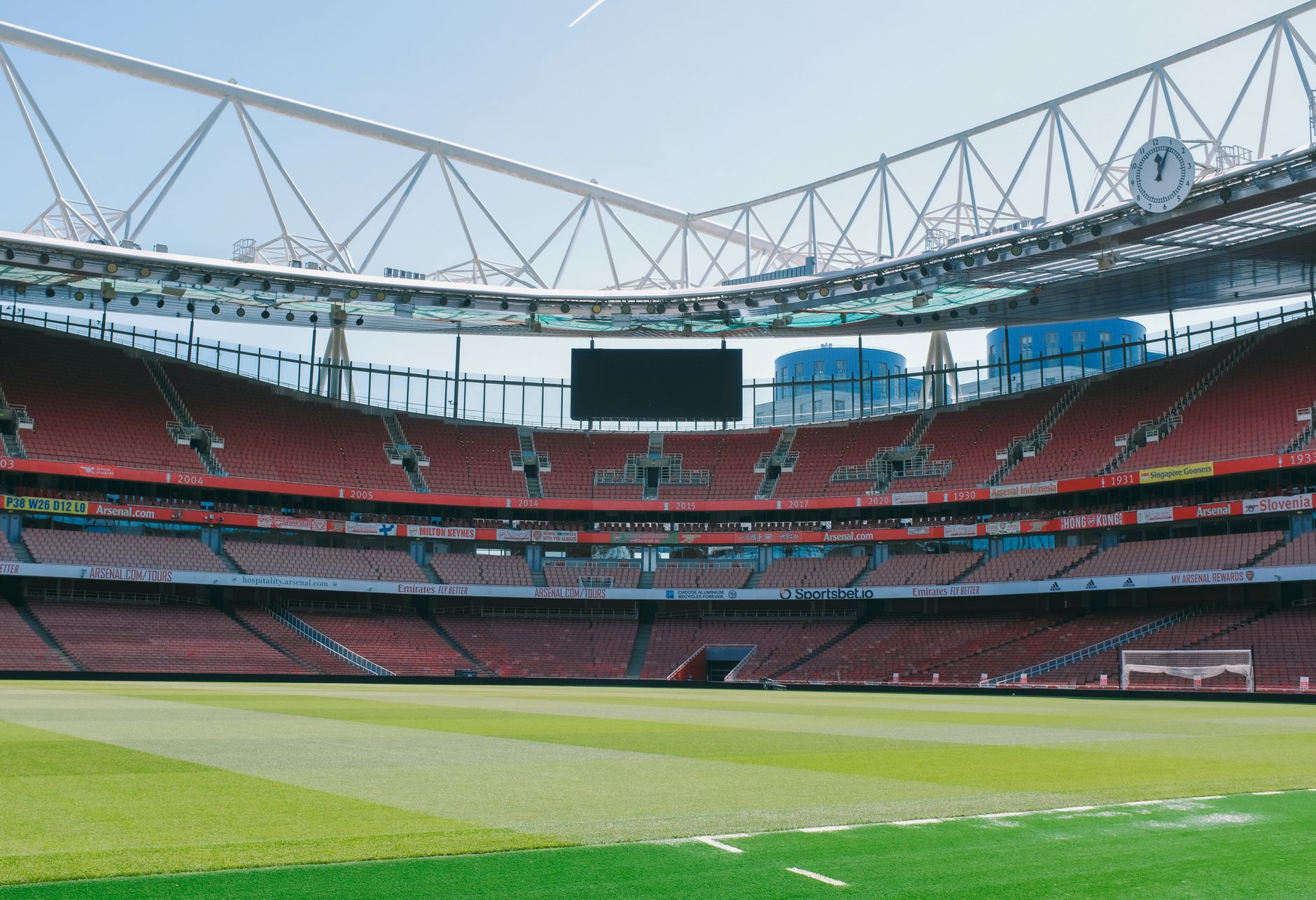
Photo by Huy Phan on Pexels
The Bottom Line
The Premier League table 2026 is a live ranking, not a prediction: 20 clubs are ordered primarily by points, with goal difference and goals scored resolving many ties. The practical takeaway is simple—read position alongside games played, recent form, home-away records, and the gap to the nearest European or relegation line. A club five points ahead after 30 matches is in a much stronger position than a club five points ahead after 20, because only eight games remain in the first scenario. The official Premier League competition information confirms the 3-1-0 scoring system, while the UEFA access list explains how domestic league performance connects to European qualification. World Cup Hub uses the same discipline in its football coverage: separate confirmed table data from forecasts, then quantify the uncertainty.
Want a clearer way to follow the season?
What Players Actually See
A supporter looking at the Premier League table sees more than a single number. The standard columns are played, wins, draws, losses, goals for, goals against, goal difference, and points; together, they show both outcomes and underlying performance. For example, two clubs may each have 50 points after 28 matches, yet one can sit above the other because its goal difference is +18 rather than +7. That eight-goal gap is not decorative—it can decide Champions League qualification or relegation survival in May.
The 2026 table should also be read against fixture timing. Manchester City playing 28 matches while Liverpool has played 30 creates an apparent comparison problem, because the two clubs do not have the same number of opportunities remaining. A useful estimate is points per game: 50 points from 25 matches equals 2.00, while 50 from 30 equals 1.67. It is not an official ranking metric, but it exposes momentum more accurately than raw points alone. For deeper context, see our [Internal Link: Premier League fixture difficulty guide] and compare opponents rather than merely counting wins.
The most overlooked number is often the points gap to the relevant threshold. A team chasing fourth place should monitor the distance to fourth, not just its distance to first; a club in 17th should measure its cushion above 18th, because the relegation line is the immediate competitive risk. Five points with 10 matches left is meaningful, but five points with 30 matches left is noise. That distinction helps prevent the common mistake of treating every table position as equally stable.

Photo by Huy Phan on Pexels
The 3 Things That Matter Most
1. Which statistic decides tied positions?
Points decide the primary Premier League order, while goal difference is the first key tiebreaker for clubs level on points. If goal difference is also equal, goals scored can become decisive, followed by further competition rules where necessary. Therefore, a club scoring 60 goals and conceding 35 has a +25 goal difference, while a rival scoring 48 and conceding 30 has only +18, even if both have the same points.
This creates an important strategic edge. A late 4–0 win can improve a club’s goal difference by four, whereas a narrow 1–0 win improves it by only one; across 38 matches, those margins accumulate. However, chasing goal difference carries risk: an aggressive approach may expose a team defensively and convert a comfortable win into a draw. The rational approach depends on the table, remaining fixtures, and whether the nearest rival is likely to keep winning.
- First: points.
- Second: goal difference.
- Third: goals scored.
- Further criteria: competition regulations and, where required, additional deciding procedures.
The Premier League Handbook is the appropriate authority for formal rules, not social-media graphics or unofficial table screenshots. World Cup Hub readers should also distinguish confirmed rankings from live provisional tables, particularly during simultaneous final-day fixtures.
2. How do European places and relegation shape the table?
European qualification is determined by final league position and applicable UEFA allocation rules, while the bottom three Premier League clubs are relegated to the EFL Championship. The exact number of Champions League, Europa League, and Conference League places can vary because domestic cup winners and UEFA performance-based access rules affect the final pathway. That means “fourth guarantees Europe” is usually directionally useful but not always a complete explanation of every 2026 scenario.
The relegation battle is easier to model. Eighteenth, nineteenth, and twentieth place are the danger positions, and 17th is the minimum survival line unless a points deduction changes the mathematics. A club on 31 points after 30 matches may look safe if 18th has 24, but its position is fragile if the bottom three have easier remaining schedules. This is where expected points provide information: opponents currently averaging 1.80 points per match are materially tougher than opponents averaging 0.90.
“Every match is worth the same three points” is mathematically true, but its table value is not identical. A win against a direct relegation rival simultaneously adds three points to one club and denies three to another, creating a six-point swing in relative terms. Against a title rival, the same mechanism can reshape the top four. That is why the fixture list matters as much as recent form.
Ready to compare the 2026 race by club and objective indicators?
3. Why do fixtures and form change the meaning of position?
A table position describes what has happened; fixture difficulty helps estimate what may happen next. Arsenal, Manchester City, Liverpool, and Chelsea can all occupy similar spaces during a season while facing very different opponent sequences, injury situations, and cup schedules. A six-match sample can be informative, but it is not enough to erase a 20-point difference created over the full campaign.
A practical assessment combines three measurements:
- Points per game across the last six matches, while noting opponent quality.
- Home and away performance, because Premier League travel and stadium advantage remain material.
- Remaining opponents’ average points per match, adjusted for direct rivals and postponed fixtures.
Here is an information gain point that standard table pages often omit: postponed matches can make a club appear to have “games in hand,” but the extra match is not automatically an advantage. If it must be played during a congested period involving UEFA Champions League or FA Cup commitments, the theoretical opportunity may carry a physical cost. A club with one game in hand and 10 days of rest is in a different position from one with one game in hand and three matches in seven days.
For current analysis, combine the official Premier League table with [Internal Link: match-by-match form trends] and [Internal Link: injury and squad availability analysis]. Numbers become useful only when their timing is understood.

Photo by Franco Monsalvo on Pexels
Edge Cases & Gotchas
The first trap is treating a provisional table as final. During a matchweek, a club may temporarily rise from seventh to fourth after winning, then fall again when competitors play later that day. The second trap is ignoring games played; a two-point lead after 22 matches is not comparable with a two-point lead after 30. The third trap is assuming goal difference cannot matter until the final day, when it can decide positions at every stage if points are level.
The fourth trap involves disciplinary and financial developments. Points deductions, postponed fixtures, or competition decisions can alter the table without a ball being kicked, as English football has demonstrated in recent seasons. Everton’s Premier League points deductions in the 2023–24 season showed why a table must be checked against official announcements rather than copied from an old image. For 2026, the safest method is to record the timestamp, competition source, and whether deductions or appeals remain unresolved.
A fifth issue is statistical overconfidence. Suppose a club has won five of its last six matches; that 15-point burst is valuable, but it does not guarantee the next six results. Regression, opponent strength, red cards, and finishing variance all matter. A team scoring 12 goals from an expected-goals estimate of 7 may be finishing exceptionally well, but that gap can narrow. The contrarian conclusion is straightforward: recent form is most useful for identifying a change in process, not for blindly extending a streak.
What should bettors and analysts avoid when reading the table?
Analysts should avoid treating league position as a complete forecast because it omits schedule difficulty, injuries, goal quality, and match-state effects. A table is an outcome record, while a forecast requires additional variables such as expected goals, shot quality, rest days, and opponent strength. For responsible analysis, use the ranking to establish context, then test whether underlying performance supports the position.
In practical terms, avoid four errors:
- Betting or predicting solely from the last three results.
- Comparing clubs with different numbers of matches played.
- Ignoring goal difference in a tied points race.
- Treating an unverified screenshot as the official 2026 table.
The International Federation of Association Football, or FIFA publishes technical research showing why match performance involves more than final scores, while UEFA competition access rules demonstrate that league position can have consequences beyond domestic standings. If gambling content is part of your research, set a fixed budget, avoid chasing losses, and follow the legal requirements of your jurisdiction. World Cup Hub provides analysis, not guaranteed outcomes.
Need a more disciplined football research workflow?
Verdict
The Premier League table 2026 is best understood as a layered data set: points establish the ranking, goal difference separates tied clubs, games played reveal opportunity, and remaining fixtures provide the forward-looking context. Arsenal, Manchester City, Liverpool, Manchester United, Tottenham Hotspur, Newcastle United, Chelsea, Aston Villa, Brighton & Hove Albion, and West Ham United may dominate headlines, but table interpretation must include every club from first to twentieth. The most reliable routine is to verify the official table, calculate the points gap, compare games played, inspect goal difference, and then assess schedule difficulty. I'll be honest with you: there is no shortcut that beats those five checks. Use them together, and you can separate a genuine title or survival trend from a temporary matchweek illusion.
For ongoing 2026 football analysis, follow the evidence rather than the noise.
Frequently Asked Questions
Q: What is the Premier League table 2026?
A: The Premier League table 2026 is the live ranking of 20 English clubs during the 2025–26 season. Clubs receive 3 points for a win, 1 for a draw, and 0 for a defeat, with goal difference generally separating teams tied on points. The table also displays matches played, wins, draws, losses, goals scored, goals conceded, and total points. Because matches are played at different times, the ranking can change several times during one matchweek.
Q: How do I read the Premier League table 2026 correctly?
A: Start with points, then check games played and goal difference before judging a club’s position. A club with 48 points from 24 matches has more remaining opportunities than one with 48 points from 29 matches, so raw points alone can mislead. Next, compare recent form, home-away records, and the difficulty of remaining fixtures. Always confirm the date and source because a live table is provisional until the relevant matches are complete.
Q: What is the difference between points and goal difference?
A: Points measure results, while goal difference measures goals scored minus goals conceded. A win gives 3 points regardless of whether the score is 1–0 or 5–0, but the 5–0 result adds more to goal difference. Goal difference becomes especially important when two clubs finish level on points. It can decide Champions League qualification, European positions, or survival, so analysts should never ignore it.
Q: How many Premier League clubs are relegated in 2026?
A: Three clubs are normally relegated from the Premier League to the EFL Championship at the end of the season. The teams finishing 18th, 19th, and 20th are the usual relegation places, while 17th is the normal survival position. Points deductions or exceptional competition decisions can affect the practical table, so final confirmation should come from official Premier League announcements rather than historical assumptions.
Q: What does a game in hand mean in the 2026 Premier League table?
A: A game in hand means a club has played one fewer match than a comparable rival. It offers an additional opportunity to earn points, but it does not guarantee a higher future position because the match still has to be played. Fixture congestion, injuries, European commitments, and opponent quality can reduce the practical value of that opportunity. Compare the unused fixture’s opponent and rest period before calling it an advantage.
Q: How are European places decided from the Premier League table?
A: European places are determined mainly by final Premier League position, with UEFA allocation rules and domestic cup results affecting the exact number and competition. The highest-ranked clubs generally target UEFA Champions League qualification, while lower positions may lead to the UEFA Europa League or UEFA Europa Conference League. The allocation can change under UEFA access rules, so supporters should check the official 2026 regulations before treating a specific position as guaranteed.
Q: Can the Premier League table change without a match being played?
A: Yes, the table can change because of a points deduction, postponed fixture decision, appeal outcome, or other official competition ruling. Such cases are less common than ordinary match-driven changes but can materially alter title, European, or relegation calculations. When a club’s position changes unexpectedly, verify the Premier League announcement, the effective date, and whether the decision remains subject to appeal.